Speed Money: How DeFi Mechanics Are Giving Sharp Bettors an Edge Traditional Books Can't Plug
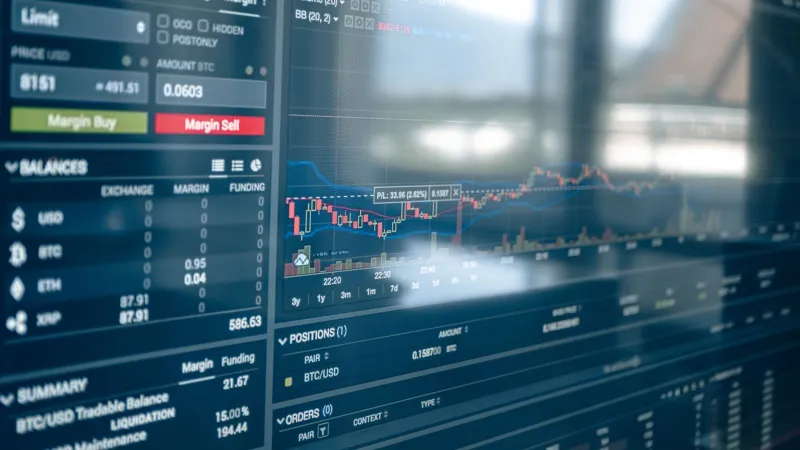
Forget card counting. Forget line shopping across a dozen sportsbook apps. The sharpest operators in decentralized betting aren't just finding value — they're engineering it, using financial tools that didn't exist five years ago and that most casual bettors have never heard of.
Welcome to the intersection of DeFi and sports wagering, where flash loans, automated market makers, and on-chain price oracles are turning betting markets into something that looks a lot more like a trading floor than a Vegas sportsbook.
The Problem With Traditional Odds Markets
To understand why DeFi mechanics matter in betting, you first need to understand the inefficiency problem that's always existed in traditional sportsbooks.
Conventional books set lines based on a combination of analytical models and public betting flow. When one book moves a line and another hasn't caught up yet, a brief window opens where a sharp bettor can grab value on the lagging side. This is classic line shopping — it's legal, it's been around forever, and books have gotten extremely good at closing those gaps quickly.
But here's the thing: traditional sportsbooks operate in silos. Their odds engines don't communicate in real time with each other or with external financial markets. There are latency gaps, manual adjustments, and human decision-making baked into the process.
Decentralized betting protocols don't work that way. Their odds are often set algorithmically, tied to liquidity pools and on-chain data feeds. And that creates a completely different category of exploitable inefficiency.
What a Flash Loan Actually Is — and Why Bettors Care
A flash loan is one of DeFi's stranger inventions. In simple terms, it's an uncollateralized loan that must be borrowed and repaid within a single blockchain transaction. If you don't pay it back before the transaction closes, the whole thing reverts like it never happened.
In trading, flash loans are used to execute arbitrage across DEXs — borrow a million dollars worth of ETH, swap it across three protocols to exploit price differences, return the loan, and pocket the spread, all in one atomic transaction.
Now apply that concept to prediction markets and decentralized betting pools.
Some on-chain betting markets set their odds dynamically based on the ratio of money wagered on each outcome — similar to a parimutuel system. A large, sudden bet can shift the implied odds in that pool. A sophisticated actor can use a flash loan to temporarily move a market, create a price discrepancy relative to another platform or real-world data, execute a counter-position elsewhere, and then unwind the original position — all within seconds.
It's not simple. It requires smart contract literacy, precise timing, and an understanding of how specific protocols calculate their odds. But for those who can execute it, the edge is real and largely unavailable to casual bettors.
Liquidity Pools and the Odds-Setting Machine
Many decentralized betting platforms use automated market maker (AMM) models borrowed directly from DeFi exchanges. Instead of a bookmaker setting a line, odds emerge from the ratio of assets in a liquidity pool.
This is elegant in theory — it's trustless, it's transparent, and it removes the house's ability to shade lines against sharp action. But it also creates mechanical patterns that experienced traders recognize immediately.
When a pool is thin — meaning there isn't much liquidity backing it — a relatively small bet can move the odds significantly. Sophisticated bettors monitor pool depth in real time, looking for moments when an event's market hasn't attracted enough liquidity to be efficiently priced. A mispriced pool on an obscure soccer match or a niche prop bet can represent genuine positive expected value, not because the bettor has better information about the game, but because the market mechanism itself hasn't settled.
This is edge-finding through market structure rather than sports knowledge. And it's entirely legal.
Oracle Manipulation and the Gray Zone
Here's where things get a little murkier.
Decentralized betting protocols rely on oracles — external data feeds — to determine outcomes. Who won the game? What was the final score? What was the price of Bitcoin at 3pm? Oracles pull that information from the real world and deliver it to the smart contract.
Oracle manipulation — artificially influencing the data feed that determines a bet's outcome — has been used to exploit DeFi protocols before. In the lending space, attackers have used flash loans to temporarily distort token prices on low-liquidity DEXs, tricking oracle systems into reporting false prices and triggering profitable liquidations.
In theory, a similar attack vector exists in betting protocols that rely on price-based oracles. This is the line between clever arbitrage and outright exploitation. Most reputable platforms have implemented multi-source oracle aggregation and time-weighted price mechanisms to close these gaps, but the history of DeFi is littered with protocols that thought they were protected until they weren't.
For bettors, the takeaway is this: understanding how a platform sources its outcome data is part of your due diligence. A protocol with a single, manipulable oracle isn't just a risk for the platform — it's a risk for everyone with funds in the pool.
What This Means for the Casual Bettor
Most people reading this aren't going to start writing flash loan arbitrage bots tomorrow. But understanding that these dynamics exist changes how you should think about the markets you're participating in.
Thick, well-established prediction markets tend to be efficiently priced. Newer, lower-liquidity pools on emerging platforms are more likely to carry exploitable inefficiencies — but they also carry more counterparty and smart contract risk.
The DeFi-native edge players are, in a strange way, doing the same thing the market always rewards: finding information or structural advantages that others don't have and acting on them faster. Whether that's "legitimate" edge-finding or gaming the system depends entirely on who you ask — and what the protocol's terms actually prohibit.
What's clear is that decentralized betting markets are evolving faster than any regulatory framework or traditional sportsbook can track. The players who understand the mechanics aren't just betting on outcomes — they're betting on the market itself.
That's a whole different game. And on Nois.bet, we think you should know it exists.