Riding the Crash: How Smart Bettors Turn Crypto Meltdowns Into On-Chain Opportunities
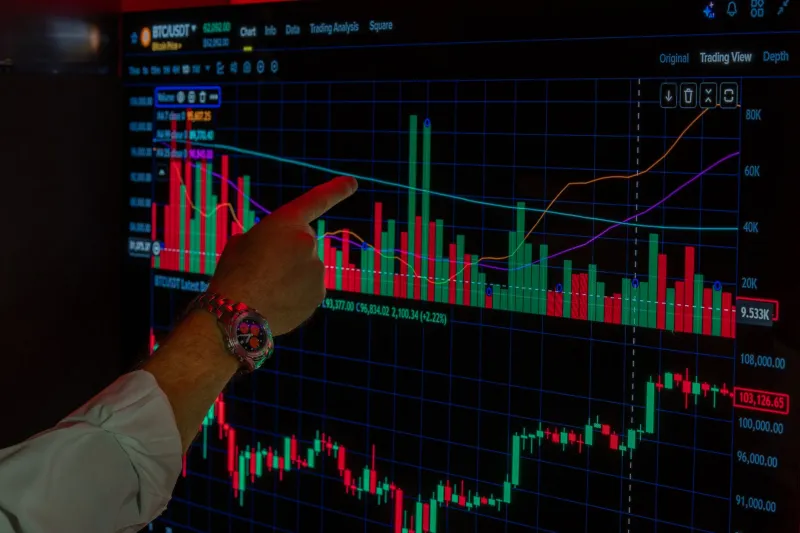
It's Sunday afternoon. You've got a solid three-team parlay locked in, your wallet is funded in ETH, and everything looks clean. Then, out of nowhere, the market drops 18% in forty minutes. Your crypto is worth less, your effective stake just shrank, and if you're on a centralized sportsbook, there's basically nothing you can do about it. You ride it out or you eat the loss.
But here's the thing — if you're betting on-chain, that crash isn't necessarily a disaster. For bettors who understand how decentralized platforms work, volatility is less of a threat and more of a tool.
Why Traditional Books Leave You Stranded
Centralized sportsbooks operate in a closed loop. You deposit dollars or crypto, your balance gets converted to a fixed value, and that's what you're working with. The book doesn't care if ETH just fell off a cliff. Your bet is locked, your position is static, and your only option is to wait.
That rigidity is by design. Traditional operators want predictability — both for themselves and, to some extent, for the bettor. But predictability cuts both ways. When conditions shift dramatically mid-wager, you're stuck.
Decentralized platforms don't work that way. Because your funds stay in your wallet until settlement, and because on-chain markets run continuously, you retain real-time flexibility that centralized books simply can't offer.
The Hedge Window Most Bettors Miss
When crypto takes a hit, the window to act opens fast. Here's a scenario worth walking through.
Say you've placed a $500 equivalent bet in ETH on the Chiefs to cover the spread. ETH drops 20% before the game ends. Your effective position just shrank to around $400 in real terms. On a traditional book, that's your problem. On a decentralized platform, you've got options.
Some on-chain platforms allow you to layer additional positions mid-event — essentially buying insurance against both the market move and the outcome you're already exposed to. Others integrate with DeFi protocols where you can simultaneously open a short position on ETH while your bet is still live. The two positions partially cancel each other out, capping your downside if crypto keeps falling.
This isn't exotic finance. It's the same logic a stock trader uses when they buy puts to protect a long position. The difference is that on-chain betting environments make this accessible to regular players — not just hedge funds.
Stablecoin Pivots as a Live Risk Tool
Another move worth understanding is the mid-session stablecoin pivot. Several decentralized platforms let you hold or swap your balance into a stablecoin like USDC mid-session without fully exiting your active positions.
If you see a sharp crypto drawdown coming — maybe a Fed announcement just dropped, maybe a major exchange just paused withdrawals — you can lock your remaining balance in a dollar-pegged asset while your existing bets play out in the original token. You're not abandoning your wagers. You're just protecting the capital you haven't committed yet.
It's a small move that can matter a lot when volatility spikes. Traditional books give you zero version of this flexibility.
Reading the Volatility Signal Itself
Here's where it gets interesting. Experienced on-chain bettors don't just react to crashes — they use them as signals.
When crypto markets go haywire, retail bettors tend to make emotional decisions. They pull funds. They make hasty bets to try to recover losses. Liquidity thins out in certain pools. All of that creates mispricings — situations where the odds on a given outcome no longer reflect the actual probability because the market is distracted.
Sharp players who keep a cool head during a crash can find lines that are slightly off, pools where the liquidity imbalance has pushed value to one side, or live betting windows where the chaos creates an edge that wouldn't exist in a calm market.
This is one of the less-discussed advantages of decentralized betting: because the market is driven by participants rather than a centralized odds compiler, emotional moments create genuine inefficiencies.
Practical Guardrails Before You Get Cute
None of this means you should start treating your sports betting wallet like a trading account. A few things worth keeping in mind:
Size your crypto exposure intentionally. If a 20% ETH drop would materially damage your betting bankroll, you're probably over-exposed. Keep a portion in stablecoins as a base layer.
Understand gas costs before you hedge. On networks like Ethereum mainnet, executing multiple transactions during a volatile period can get expensive fast. Layer-2 networks and alternative chains have made this more manageable, but it's still a real cost to factor in.
Don't hedge for the sake of activity. Sometimes the right move during a crash is to sit still and let your existing positions run. Overtrading during volatility is how people compound losses, not prevent them.
Know your platform's settlement mechanics. Some decentralized platforms settle in the native token at the time of the bet. Others convert to stablecoin at settlement. That difference matters enormously when prices are swinging.
The Bigger Picture
Crypto volatility isn't going away. If anything, as more capital flows into digital assets and macro conditions stay unpredictable, the swings are likely to remain part of the landscape for the foreseeable future.
What's changing is how bettors can respond to them. Decentralized platforms are quietly building an environment where market turbulence doesn't have to be a passive experience. You don't have to just absorb a crash. You can position around it, hedge against it, or even use it as a signal to find better value.
That's a meaningful shift from the old model — one where the book held all the flexibility and you held none. On-chain betting doesn't guarantee you'll profit when markets fall apart. But it gives you the tools to try. And in a game where edges are everything, having options when others have none is worth a lot.