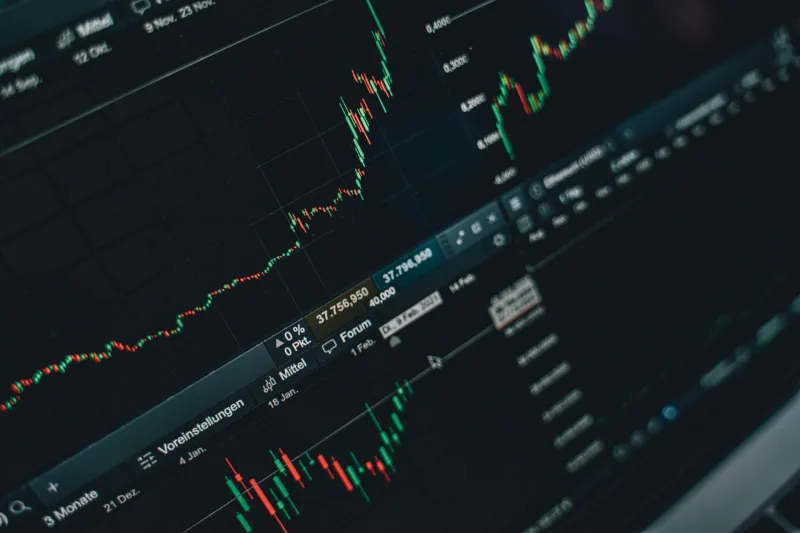
Borrowed Rope: The Cold Math Behind High-Leverage Bets and Why the House Always Collects

Let's start with a number: 1%.
If you're running 100x leverage on a decentralized betting or trading platform, a 1% move against your position wipes you out completely. Not hurts you. Not sets you back. Wipes you out. Your collateral is gone, the platform liquidates your position, and you're left watching the market continue moving — sometimes immediately reversing — without you in it.
This isn't a bug. It's the product.
High-leverage options on decentralized platforms have exploded in availability over the last few years. Platforms advertising 10x, 50x, and 100x leverage on everything from crypto prices to sports outcomes have pulled in billions in retail capital. And the overwhelming majority of that capital has quietly flowed upward — to liquidity providers, protocol treasuries, and the handful of sophisticated players who understand exactly how the mechanics work.
Here's the full picture.
How Leverage Actually Works On-Chain
When you place a leveraged bet or position on a decentralized platform, you're not just betting your own money — you're borrowing the rest. A $100 position at 10x leverage means you control a $1,000 exposure. The platform (or its liquidity pool) is fronting the other $900.
The platform isn't doing this out of generosity. It charges a funding rate — a periodic fee paid by leveraged position holders to the other side of the trade. On volatile assets, these rates can be substantial. A position held for days or weeks can bleed a meaningful percentage of its value just in funding costs, independent of any market movement.
And then there's the liquidation threshold. Most platforms liquidate your position before your collateral hits zero — typically at 80-90% loss — to protect themselves from going underwater. This means in practice, you lose your collateral slightly before the math would technically require it. The platform is not taking on risk for free.
The Liquidation Cascade: When Everyone Gets Wrecked at Once
Here's where things get genuinely dangerous in decentralized markets. Because many positions share similar liquidation thresholds, a market move in one direction can trigger a chain reaction.
Price drops 2%. A wave of leveraged long positions hits their liquidation threshold. The platform sells their collateral to cover. That selling pressure pushes the price down another 1%. Another wave of positions gets liquidated. More selling. The cycle accelerates.
This is a liquidation cascade, and it's not hypothetical — it's happened repeatedly across major DeFi platforms. In March 2020, crypto markets saw over $1 billion in leveraged positions liquidated in a matter of hours. Similar events occurred in May 2021 and again in November 2022. Each time, retail players holding leveraged positions got caught in the cascade while larger players — who often had prior knowledge of where liquidation clusters existed, thanks to on-chain data — positioned accordingly.
Some sophisticated traders actively hunt liquidation clusters. They can see on-chain where large concentrations of positions sit, and they understand that pushing price toward those levels triggers a cascade that moves the market further in their favor. Retail leverage players are, in this dynamic, the fuel.
The Psychology Trap: Why Smart People Keep Doing This
So why do intelligent, otherwise rational people keep using high leverage? Behavioral finance has a clear answer: the asymmetry of how humans experience gains versus losses.
A 10x leverage win on a $200 position nets $2,000. That story is vivid, memorable, and shareable. It gets posted in Discord servers. It becomes the anecdote that convinces the next person to try. The 20 people who blew up their $200 positions on the same trade don't post about it. Survivorship bias does the marketing work for the platform.
Add to this the design of most leverage interfaces — clean, gamified, with big numbers and simple sliders — and you have a product engineered to minimize the psychological friction of taking enormous risk. The 100x option is right there on the screen, one click away. The liquidation math is buried in the documentation.
Position Sizing: The Framework That Actually Keeps You in the Game
None of this means leverage is categorically off-limits for sophisticated players. But using it without a strict position-sizing framework is how accounts go to zero.
Here's a starting point for thinking about it rationally:
The Kelly Criterion, adapted for leverage: The Kelly Criterion is a mathematical formula for optimal bet sizing based on your edge and the odds. When you apply it to leveraged positions, the output is almost always a much smaller position than your instincts suggest. For most retail scenarios, fractional Kelly — betting a quarter or half of what Kelly suggests — is more appropriate given the uncertainty of edge estimation.
The 1% rule: Never risk more than 1% of your total bankroll on a single leveraged position. At 10x leverage, this means your actual collateral for any single position is 0.1% of your bankroll. This feels painfully conservative until you've watched a cascade liquidate everything.
Pre-define your exit: Before you open a leveraged position, decide exactly where you're cutting it if it goes wrong. Then do it. The single most common story from traders who've survived leverage blowups is that they knew they should have cut the position and didn't. The market moved against them. They held, hoping. The liquidation engine didn't share their optimism.
Voices From the Other Side
Talk to enough traders who've been through a leverage blowup and a pattern emerges. The losses are rarely from a single catastrophic bet. They're from a series of escalating positions — each one slightly larger than the last, each one justified by the need to "make back" what was lost on the previous trade. This is the martingale trap: doubling down on losses until the bankroll is gone.
One consistent theme: the platforms make it extremely easy to add to losing positions. The UI is frictionless. The borrowed capital is right there. The temptation to average down on a 50x leveraged position is real, and the consequences are swift.
The Honest Verdict
High-leverage products on decentralized platforms aren't scams in the traditional sense. The mechanics are disclosed. The math is available. But they are designed — through interface choices, funding rate structures, and liquidation mechanics — to systematically favor the platform and sophisticated players over retail participants.
That doesn't mean you can't use them. It means you need to understand the game you're actually playing before you sit down at the table. On-chain betting and DeFi offer genuine advantages over traditional systems: transparency, custody of your own assets, and access to markets that didn't exist five years ago. Leverage, used recklessly, trades all of those advantages for a lottery ticket with terrible odds.
Bet bold. But bet with your eyes open.