Pump Spotters: How to Read the Manipulation Playbook Before It Wrecks Your On-Chain Position
There's a reason the word nois sits at the heart of this platform's identity. In markets — whether you're betting on a championship game or placing a position on a decentralized prediction market — noise is everywhere. The problem isn't that noise exists. The problem is that some of it is manufactured on purpose, by people who want your money.
Pump-and-dump schemes aren't new. They predate crypto by decades — penny stock boiler rooms ran the same playbook in the 1990s. But decentralized betting markets have created a fresh environment where these tactics thrive, and where retail players are often the last to know the game has already been rigged.
Let's break down exactly how these schemes work, what they look like in the wild, and — most importantly — how to stop them from torching your bankroll.
What a Pump-and-Dump Looks Like in a Betting Context
In traditional crypto markets, the mechanics are straightforward: a coordinated group buys a low-cap token, hypes it across social channels, and sells into the retail crowd once the price spikes. In decentralized betting markets, the same dynamics play out — but the asset being manipulated isn't always a token. Sometimes it's odds.
Here's a real pattern worth knowing: a prediction market opens on a relatively obscure sporting event or political outcome. Suddenly, a wave of large wallets starts placing bets on a specific side. The odds shift dramatically. That movement gets screenshotted, shared in Telegram groups and Discord servers, and framed as "smart money" flowing in. Retail bettors pile on, convinced they're following the sharp action. Then the original wallets hedge or exit, and the market corrects — leaving the followers underwater.
The manipulation isn't always this clean. But the underlying structure — create movement, manufacture narrative, exit into the crowd — shows up again and again.
The Anatomy of a Failed Pump: Three Patterns to Recognize
Pattern 1: Velocity Without Volume
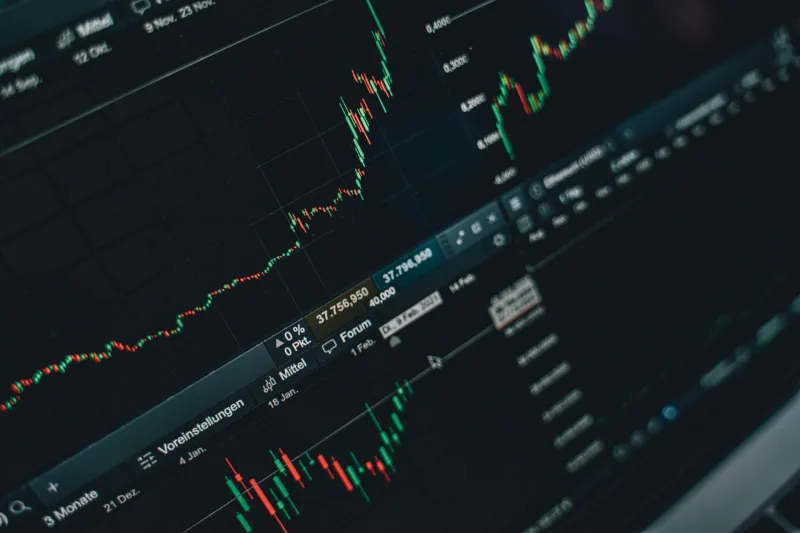
When odds or token prices move fast but the underlying volume doesn't support it, that's your first red flag. Legitimate sharp money tends to move markets gradually because large players don't want to signal their own positions. Sudden, dramatic shifts in odds on thin liquidity are almost always suspicious. Check the depth of the market. If a small number of transactions are doing outsized work, slow down.
Pattern 2: Coordinated Social Timing
Pump campaigns need distribution. Watch for synchronized posting across multiple platforms — Reddit, X (formerly Twitter), Discord, Telegram — all pushing the same narrative within a short window. The messaging is usually vague but emotionally charged: "huge move incoming," "insiders know something," "this is the play of the week." Real market analysis doesn't usually arrive in waves of identical language across five platforms simultaneously.
Pattern 3: Wallet Clustering
This is where on-chain data forensics earns its keep. Tools like Nansen, Arkham Intelligence, and even free block explorers let you trace the wallet addresses placing large bets or token purchases. When you see a cluster of wallets — all funded from the same source, all created around the same time — moving in lockstep, that's coordination, not coincidence. You don't need to be a developer to spot this. You just need to spend ten minutes on a block explorer before you commit capital.
Sentiment Analysis: Reading the Room Without Getting Played
Sentiment tools have gotten genuinely useful in the last couple of years. Platforms like LunarCrush, Santiment, and even custom crypto Twitter scrapers can give you a read on how organic a narrative actually is. The key metric isn't just volume of mentions — it's the ratio of unique accounts to total posts. A real market event generates diverse commentary. A coordinated campaign generates high post volume from a suspiciously narrow account base.
One useful mental model: if a narrative feels like it arrived fully formed — complete with charts, memes, and a clear call to action — it probably was designed that way. Organic market excitement is messy and contradictory. Manufactured hype is weirdly polished.
On-Chain Forensics Without a Computer Science Degree
You don't need to write a single line of code to do basic on-chain investigation. Here's a simple workflow:
- Identify the wallets driving the movement. Use the platform's transaction history or a block explorer to find the addresses placing the largest bets or trades.
- Check wallet age and funding source. New wallets funded from centralized exchanges in bulk are a warning sign. Old wallets with diverse transaction histories are more credible.
- Look for clustering. If multiple large wallets trace back to the same funding address, you're likely looking at a single actor using multiple accounts.
- Cross-reference timing. Did the social media campaign launch before or after the on-chain movement? If the hype preceded the on-chain action, you might be watching a pump in real time.
This process takes maybe 15 minutes. That's a small investment before placing a significant bet.
The Nois Principle: Cutting Through to What Actually Matters
The name of this platform isn't accidental. Betting markets — on-chain or otherwise — are drowning in noise. Some of it is random. Some of it is engineered. The bettors who last are the ones who build systems for filtering it out rather than chasing every signal that looks shiny.
Pump-and-dump schemes work because they exploit the most human of instincts: fear of missing out. The antidote isn't cynicism — it's process. Build a pre-bet checklist. Verify wallet behavior. Cross-check social sentiment. Question narratives that arrive too neatly packaged.
The market will always generate noise. Your job is to make sure you're not the one paying for someone else's exit.
Final Thought: Trust the Data, Not the Hype
Decentralized betting gives you something traditional sportsbooks never could — a transparent record of every transaction, every wallet, every movement. That transparency is a weapon. The traders and bettors who learn to use it stop being the exit liquidity and start being the ones who exit first.
The next time a "can't miss" narrative hits your feed with unusual speed and polish, don't react. Investigate. The blockchain has receipts. Read them before you bet.